

Equine Massage Sessions - What to Expect at Northeast EquiWellness

Updated: Jul 1
Equine massage is a powerful tool to support a horse’s health, comfort, and performance. At Northeast EquiWellness, each session is designed to address the unique needs of every horse and rider pair. Equine massage sessions encourage relaxation & ease muscle tension or soreness. Sessions may include additional supportive modalities like ultrasound therapy, light/laser therapy, and PEMF therapy. If you’re a horse owner curious about what happens during an equine massage, this guide will walk you through the process step-by-step. You’ll learn what to expect, how your horse might respond, and why regular massage can make a real difference in your horse.

Initial Assessment of the Horse
Every effective equine massage session begins with a thorough assessment. Your practitioner, Tayla Howerton, ESMT, will observe the horse’s posture, behavior, and movement. This step helps identify areas of tension, soreness, or imbalance.
First up, visual inspection: I will look for signs such as uneven muscle development, swelling, or stiffness. The horse's posture and conformation are evaluated, taking note of the alignment of joints & leg positioning. Your horse will be inspected from all sides and angles, taking note of any asymmetry of the scapulae or pelvis.
Palpate the horse: I will use my hands to gently feel muscles, joints, and soft tissues to detect sensitivity, tightness, and areas of warmth or cold.
Discuss with owner: The horse owner is invited to share information about the horse’s recent activities, health history, and any concerns. Usually, I ask some clarifying questions based on the horse's initial inspection. I will also ask about your goals for your horse, to help create a plan and set realistic expectations.
This assessment sets the foundation for a tailored massage plan. It ensures the session targets the horse’s specific needs rather than applying a generic approach. By this point, I have a flexible plan in mind for how the session will progress, with room to adjust based on any new findings.
The Ideal Massage Area
Creating a calm and safe environment is essential for a successful session. Northeast EquiWellness asks that owners prepare a quiet, calm environment for their horse's relaxation.
Quiet Space: The area is free from loud noises and distractions. Sessions are ideally scheduled to avoid feeding time, as feeding can elicit anxiety or excitement in horses.
Comfortable Environment: Your horse may be massaged while held by their owner, or standing in their stall or while tied. Horses should be tied loosely enough so they can shift around or lower their head if they need to.
Safety Measures: The area is enclosed or secure to prevent the horse from being startled or wandering off. Other horses should not be in close proximity. For the massage therapist's safety, any history of the horse biting or kicking should be disclosed. The therapist should be informed of any sensitive or reactive areas, and the owner or trusted barn staff should be available nearby to help if needed.
Preparing the environment helps both horse and human feel secure, which improves the effectiveness of the treatment.
Techniques Used During the Session
Equine massage involves a variety of techniques, each chosen based on the horse’s condition and response. I use hands-on methods to release muscle tension, improve circulation, and promote relaxation.
Effleurage: Long, gliding strokes warm up muscles and increase blood flow.
Petrissage: Kneading and rolling motions help loosen tight muscles and break down adhesions.
Cross-Fiber Friction: Small, rapid, back-and-forth movements target trigger points, areas of fibrosis, and long muscle fibers such as those in the hamstrings.
Tapotement: Sometimes called percussion, this technique stimulates nerves and muscles, often used toward the end of the session.
Passive Stretching: I perform gentle stretches tailored to your horse's needs & ability. I am happy to show owners how to perform these stretches to help maintain their horse's progress between sessions.

Performing a forelimb protraction stretch with a Thoroughbred mare after an equine massage session.
Pressure and technique are adjusted based on the horse’s feedback. Horses may show signs of relaxation such as lowered head, soft eyes, blowing out, or even gentle sighs. Every horse responds a little differently to massage. Some horses with soreness can be reactive to even light touch, especially near the beginning of the massage. This usually improves, and these horses tend to relax, as the session progresses.
Optional Add-On Modalities
I am trained in a variety of electrotherapies: therapeutic ultrasound, light and laser therapy, and pulsed electromagnetic field therapy. If I feel your horse would benefit meaningfully from an additional therapy, I will consult with you, explaining the treatment and pricing, and obtaining consent before I proceed. There will never be pressure or attempts to needlessly upcharge you; I am honest about the possible benefits and risks of these modalities. They are not necessary for every horse.
Therapeutic Ultrasound: I recommend this therapy in specific cases of severe muscle soreness, soft tissue injury/inflammation, and advanced arthritis. Horses with kissing spine and associated soreness tend to benefit from this deep-heating therapy.
Light & Laser Therapy: When this therapy is indicated, it is added to the massage at no charge. Sometimes, I will detect restriction in joints, inflammation, or muscle sensitivity that is hard to resolve with massage alone -- in these cases, application of light therapy can provide relief.
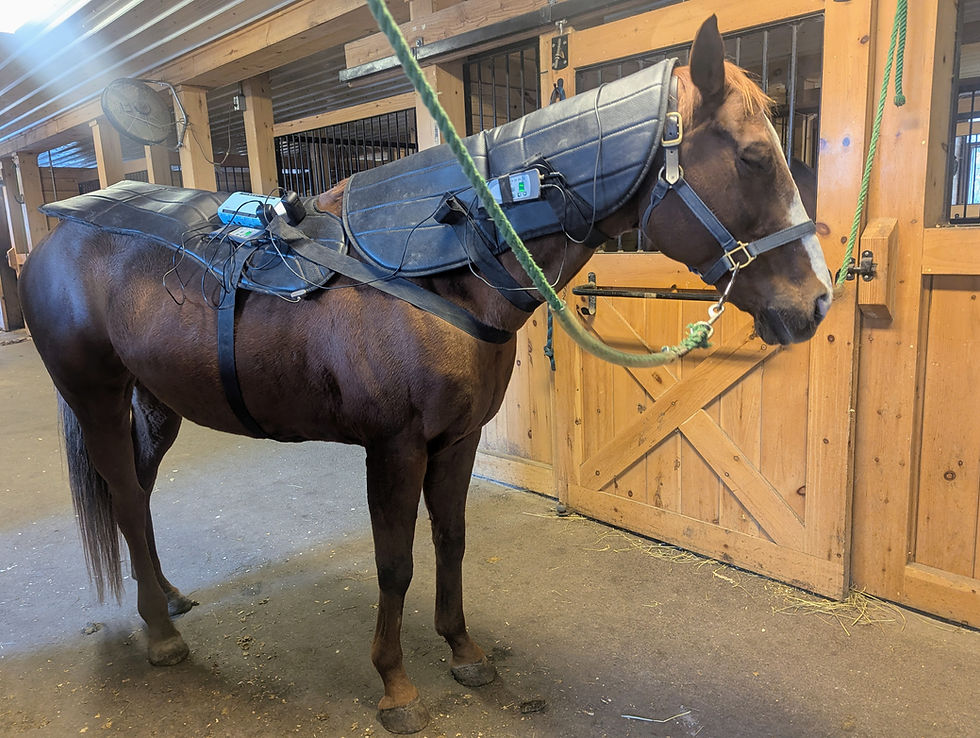
Pulsed Electromagnetic Field Therapy: Beneficial for full body recovery, especially in horses with demanding work/show schedules or chronic pain. Pulsed electromagnetic field therapy is applied as a blanket to provide a boost to your horse's recovery process.
All electrotherapies offered are low-risk and non-invasive.

Duration and Frequency of Treatments
A typical equine massage session at Northeast EquiWellness lasts between 55 minutes and 70 minutes depending on the horse's needs. There is an option to upgrade to a 90 minute extended massage session for horses with significant tension or compensation patterns.
Initial Sessions: For horses new to massage or with specific issues, weekly sessions for 4 to 6 weeks are common.
Maintenance Sessions: For stable horses with no major areas of tension or soreness in light work, sessions may be spaced out to every 6 to 8 weeks.
Performance Horses and Rehab Cases: Horses in heavy training or competition might benefit from more frequent treatments, especially during intense periods. Rehabilitation cases also typically benefit from more frequent sessions. A massage every 2 to 3 weeks may be ideal for these horses.
Consistency is key. Regular massage supports ongoing muscle health, reduces injury risk, and helps horses recover faster from workouts or stress.
What Horse Owners Can Expect During the Session
Owners often wonder how their horse will behave during a massage and what they should do.
Horse Reactions: Many horses relax deeply, sometimes even dozing off. Others may shift weight, lick, or yawn, which are signs of release. Some may initially be tense or restless if muscles are tight.
Owner Involvement: Owners are encouraged to be present but quiet and calm. This helps the horse feel safe. Respectfully, I ask that owners do not try to pet or feed their horse during sessions, as this can distract or excite the horse.
Communication: I am happy to explain what I am working on as the session progresses and what I am feeling in your horse's tissues. I usually offer advice on stretches or exercises to support the horse between sessions.
Owners often notice improvements in their horse’s movement, attitude, and comfort after just a few sessions. Some horses show visible improvement after just one session.
After The Massage
After your horse's massage, they can go into their stall or turnout. Most horses can be ridden after massage, however, if I performed deep work on the horse's back, they should rest for a day as the muscles may be sensitive. Think of how you feel after a deep tissue massage; often, it feels like you had a hard workout.
Improved Circulation: Better blood flow delivers oxygen and nutrients to muscles.
Reduced Muscle Tension: Massage breaks down knots and relieves stiffness.
Enhanced Flexibility: Stretching and muscle release improve range of motion.
Pain Relief: Massage can ease soreness from injury, overuse, or chronic conditions.
Stress Reduction: The calming effect helps reduce anxiety and promotes better behavior. Horses with trauma history or aversion to touch can benefit from massage, as it reteaches the brain that human touch can be safe and enjoyable.
Injury Prevention: Regular massage helps maintain muscle balance and joint health. Many equine injuries are the result of long-term, hidden compensation patterns that have put strain on a specific limb and have made it more prone to breakdown.
Payment & Scheduling the Next Session
After the session, the best practice is to pay your equine massage therapist as soon as possible. Payment in cash is ideal at time of service, however, I am happy to send an invoice to your email if you wish to pay using other means. I will discuss the ideal schedule and ongoing treatment plan for your horse with you. In between sessions, be sure to stay on top of your homework stretches and exercises to maintain your horse's progress!
This article was written by Tayla Howerton, ESMT, owner of Northeast EquiWellness. Tayla has laid hands on hundreds of horses throughout New Jersey and the Hudson Valley, with experience working with horses of every discipline and level -- from Grand Prix jumpers, to pasture pets, FEI dressage horses, barrel racers, miniatures, and everything in between!


Comments